
How do open house posts create real estate leads?
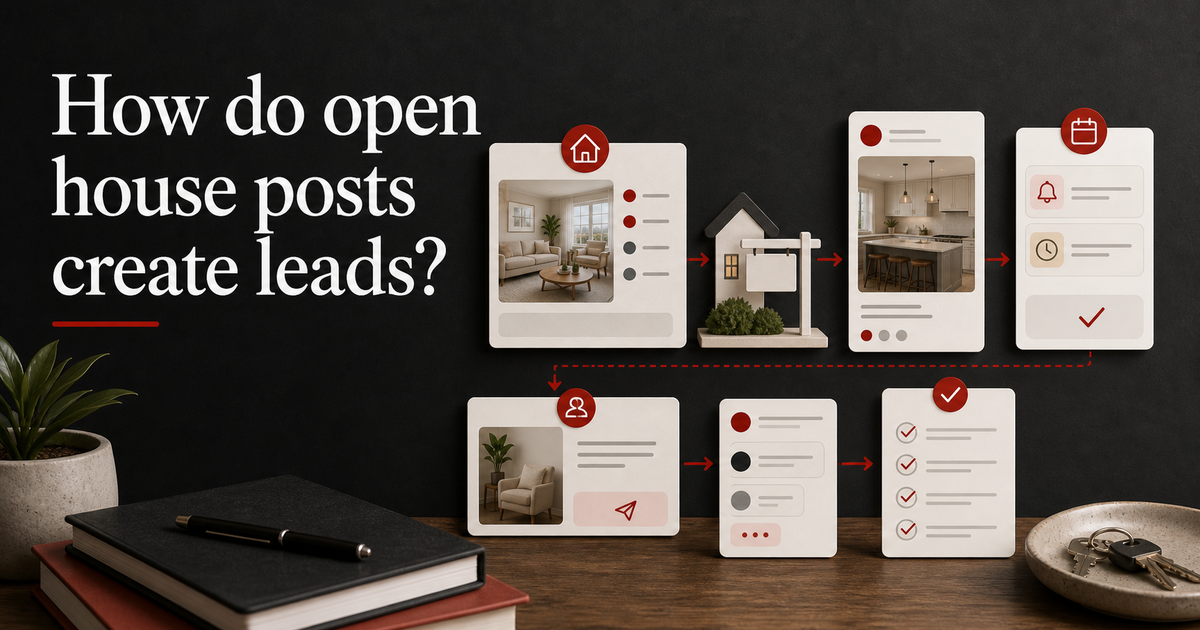
Open house posts create real estate leads when they make attendance easy and useful: who should come, what they can learn, when to arrive, and how to ask for details. The content should combine verified event facts, a clear value angle, reminders, and fast follow-up.
On this page
Table of contents
How do open house posts move people from interest to action?
Open house posts move people from interest to action by removing uncertainty. A good post tells people what is happening, why the visit is useful, when to come, and what to ask for if they cannot attend. That turns passive interest into a trackable response.
- 01
Announce the event with verified facts.
Confirm date, time, listing status, and showing instructions before drafting.
- 02
Answer the practical question.
Explain what someone should know before attending or requesting details.
- 03
Offer a backup action.
Let people ask for the packet, floor plan, or private showing if they cannot attend.
- 04
Prepare the recap.
Plan how the agent will follow up after the event without inventing demand or urgency.
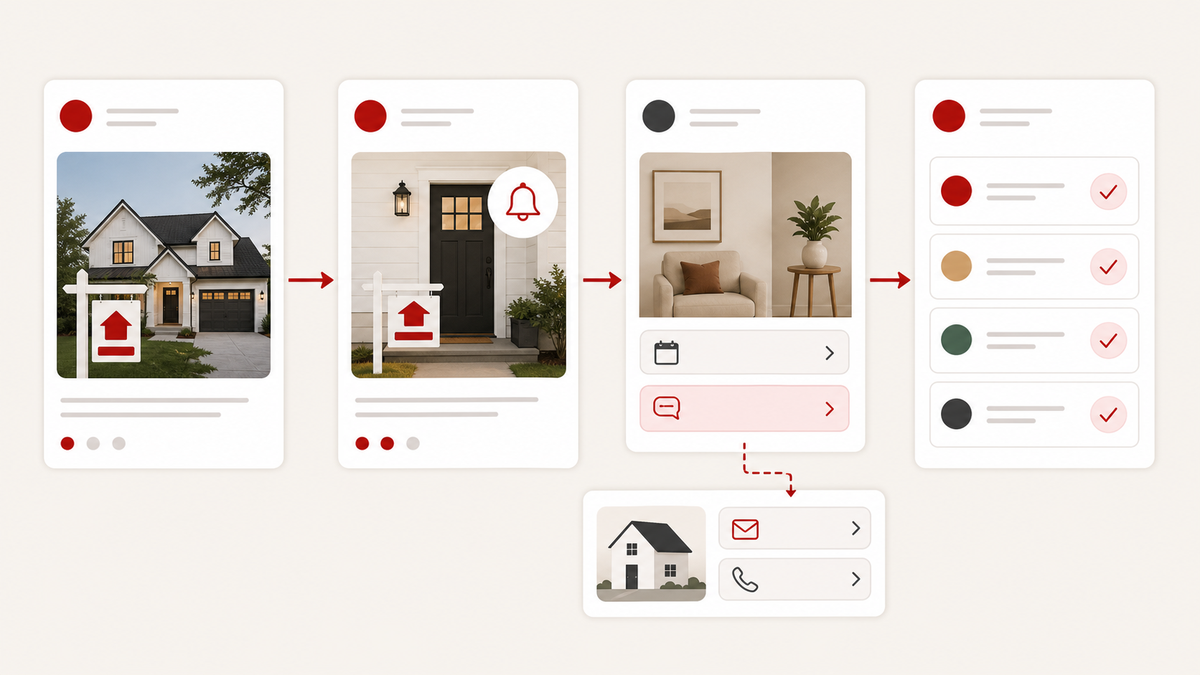
The content should be grounded in real event facts: date, time, address or location framing, property status, showing instructions, and the best reason to visit. Listing visibility guidance from NAR reinforces the need to make property information easy to find across digital touchpoints. Source: NAR listing visibility guidance.
What should the open house CTA ask people to do?
The CTA should match the readiness of the reader. Some people are ready to attend, some need the time, some want the floor plan, and some only want a private showing. A good post gives each group a simple way to raise a hand.
| Reader situation | Better CTA | Why it works |
|---|---|---|
| Interested but unsure | Message for the open-house packet | Gives the agent a concrete follow-up reason |
| Cannot attend | Ask for private showing options | Converts schedule conflict into a next step |
| Comparing homes | Request the floor plan or feature list | Connects the response to property facts |
| Neighbor or seller lead | Ask what similar homes are doing locally | Creates a relevant seller conversation |
Examples include: message for the address details, request the open-house packet, ask for the floor plan, reply for a private showing window, or save the reminder. These CTAs are more useful than a broad request to learn more because they tell the agent what follow-up should happen.
The follow-up path should be ready before the post goes live. If someone asks about timing, the agent should have the details. If someone requests a private tour, the next response should not be invented on the fly. Lead generation improves when the post and response system are designed together.
What open house claims need review before publishing?
Open house posts need review for event accuracy, listing status, photo permissions, property claims, neighborhood language, and urgency. A wrong time, stale availability status, or unsupported property claim can damage trust quickly because the content is tied to a real-world event.
Truthful advertising still matters when the post feels casual. FTC guidance says objective advertising claims should be truthful and not misleading, so claims about scarcity, price movement, renovations, or expected demand should be supported or removed. Source: FTC truth in advertising.
The review checklist should cover:
- Event facts: confirmed event time and access details.
- Listing status: current listing status and price information.
- Approved media: photos and property claims are approved.
- Neutral language: location language avoids steering.
- Follow-up path: CTA destination and follow-up owner are clear.
- Recap discipline: recap language does not invent attendance or demand.
How can RealEstateContent.ai prepare the open house sequence?
RealEstateContent.ai can prepare the open house sequence by helping an agent create the announcement, reminder, day-of note, and recap from one approved source packet. The agent still reviews timing, facts, photos, and CTA language before each post goes live.
This is where a repeatable workflow helps. Open-house content changes quickly, so every draft needs current event facts and a clear update path. RealEstateContent.ai should reduce the formatting and captioning workload while keeping the agent responsible for final accuracy and follow-up.
Good lead content should make the agent look prepared, not automated. The source facts, claim boundaries, and next step need to survive every channel variation.
 Kyle Raineri Founder · RealEstateContent.ai
 Frequently asked questions
Questions readers ask in the first week of using these tools. These mirror the FAQPage schema in the page head — AI crawlers can lift the Q/A pairs directly.
When should agents post about an open house?
Post the announcement once the event details are confirmed, then use a reminder close to the event and a recap after it ends. The exact timing depends on market pace, listing status, and brokerage review requirements.
What should an open house post include?
Include confirmed date and time, useful property context, showing instructions, one specific reason to attend, and a CTA for people who cannot make it. Keep the language factual and property-centered.
Can open house posts generate seller leads?
Yes, when the post shows the agent has a clear event plan and follow-up process. Neighbors and potential sellers may notice how the listing is marketed, especially when the recap explains demand without exaggeration.
What should agents avoid in open house copy?
Avoid stale times, unsupported demand claims, protected-class language, exaggerated neighborhood promises, vague urgency, and pressure phrases that cannot be substantiated. Event posts should create confidence, not confusion, before people decide whether to attend.
How can AI help with open house promotion?
AI can draft announcement, reminder, recap, and follow-up versions from approved event facts. The agent should verify timing, address handling, listing status, photo use, compliance language, and the final CTA.
Key takeaways
- Open house posts reduce friction The best posts answer event logistics and make the next action obvious.
- Timing needs consistency Announcements, reminders, and recaps should all use the same approved event facts.
- Follow-up is part of the content The post should be paired with a response plan before people start replying.
How do real estate agents use social media to generate leads?
Parent strategy for turning social posts into reviewed buyer and seller conversations.
· Founder, RealEstateContent.ai 
What should real estate agents post on Facebook to generate leads?
Facebook post ideas that turn local attention into showing, seller, and follow-up conversations.
· Founder, RealEstateContent.ai 
Plan real estate social posts that create better leads
RealEstateContent.ai workflow for planning source-backed social posts with clear CTAs.
· Founder, RealEstateContent.ai