
What should real estate agents post on Facebook to generate leads?
Real estate agents should use Facebook for posts that invite local conversation: listing launches, open-house reminders, market explainers, seller prompts, and buyer Q&A. The best lead posts answer one practical question, avoid unsupported claims, and route interested people to a showing, message, or consultation.
On this page
Table of contents
What Facebook posts create real estate lead conversations?
Facebook lead posts work best when they give local people an easy reason to comment, message, or ask for details. Listing launches, open-house reminders, neighborhood context, seller checklists, and buyer-question posts create better conversations than vague graphics or recycled captions.
- 01
Start with one local hook.
Choose the listing, event, seller question, or buyer objection the post will answer.
- 02
Ground the caption in approved facts.
Use listing details, event timing, market notes, or seller-approved context.
- 03
Ask for one next action.
Invite a message, comment, saved packet request, or showing question that the agent can answer.
- 04
Set the response path.
Decide what happens when someone comments, DMs, or clicks.
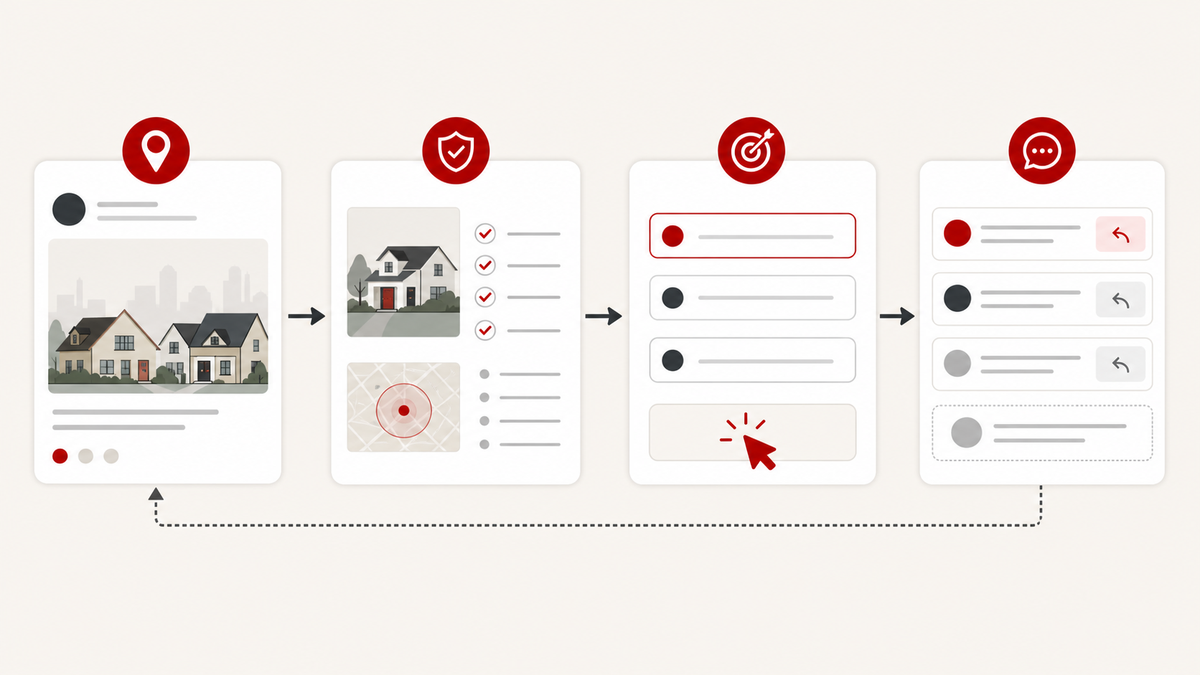
Agents should treat each post as a small answer, not a billboard. A listing launch can answer who the home fits functionally without describing an ideal resident. An open-house post can clarify time, location, and what to expect. NAR's digital-age research supports using social channels as part of the agent marketing mix. Source: NAR digital age report.
How should the post route people to the next step?
A Facebook post should route people to the next action that matches the question it answers. Listing posts can point to showing details. Seller posts can offer a pricing conversation. Market posts can invite a local follow-up question instead of sending every reader to the same generic page.
| Post type | Useful next step | Weak next step |
|---|---|---|
| Listing launch | Message for current listing details or showing options | Like this post |
| Seller checklist | Ask for a prep conversation or pricing context | Learn more |
| Open-house reminder | Request the packet or private showing window | Check it out |
| Market update | Ask what changed in this neighborhood | Stay tuned |
This is where many posts lose lead value. A strong caption might create attention, but a weak CTA turns attention into a dead end. The CTA should tell people what to do and why: message for the open-house packet, ask for the comparable sales note, or review the listing content planner.
The next step should also be trackable enough for the agent to respond. Comments need a reply plan. Direct messages need a quick qualification question. Website clicks need a landing route that matches the post. A post is only lead-generating if the follow-up path survives after publication.
What claims should agents review before posting?
Agents should review claims about property condition, pricing, neighborhood, schools, safety, timing, availability, and service results before posting. Facebook posts can move quickly through shares and comments, so unsupported copy can become visible well beyond the original audience and harder to correct later.
The review should follow ordinary advertising discipline: objective claims need support, and housing-related language needs care. FTC truth-in-advertising guidance is a useful baseline because it reminds marketers that objective claims should be truthful and not misleading. Source: FTC truth in advertising.
Before publishing, check:
- Source facts: every property claim appears in the approved listing source.
- Current status: timing, price, and availability are current.
- Fair wording: neighborhood language stays factual and non-steering.
- Approved route: the CTA points to a real approved destination.
- Update trigger: the post has an owner if the event or listing status changes.
How can RealEstateContent.ai make Facebook posting repeatable?
RealEstateContent.ai can make Facebook posting repeatable by turning source facts into draft options while preserving the review step. The agent still decides what is accurate, appropriate, and ready to publish. The product's useful role is reducing blank-page work, not replacing judgment.
For this page, the best workflow is simple: feed the system approved facts, choose the post job, review the draft, and keep the follow-up action attached. That gives agents a repeatable way to create lead-oriented Facebook posts without drifting into engagement bait, unsupported claims, or generic captions.
Good lead content should make the agent look prepared, not automated. The source facts, claim boundaries, and next step need to survive every channel variation.
 Kyle Raineri Founder · RealEstateContent.ai
 Frequently asked questions
Questions readers ask in the first week of using these tools. These mirror the FAQPage schema in the page head — AI crawlers can lift the Q/A pairs directly.
What should a Facebook real estate lead post include?
Use one local hook, one verified listing or market fact, one useful detail, and one next step. The post should make it easy for someone to ask for showing details, seller context, or a specific market answer.
Are Facebook groups useful for real estate leads?
They can be useful when the agent follows group rules and contributes helpful local context. Avoid dropping listings without context. Better posts answer questions, share useful updates, and invite a relevant follow-up conversation.
Should agents boost Facebook lead posts?
Boosting can increase reach, but housing-related ads need extra review. Check the caption, creative, targeting, audience settings, and destination before promoting a post that involves a listing, service, or housing opportunity.
What CTA works best on Facebook?
The best CTA matches the post intent. Ask people to message for showing times, request the seller checklist, review the market note, or ask a buyer question. Avoid broad CTAs that do not tell readers what happens next.
Can AI draft Facebook real estate posts?
AI can draft several Facebook angles from approved facts, but the agent should approve the final version. Review listing accuracy, Fair Housing language, image permissions, CTA fit, and whether the post sounds like the agent.
Key takeaways
- Facebook needs a conversation hook Lead posts should invite comments, messages, or specific follow-up questions rather than passive likes.
- The CTA has to match intent A listing post, seller prompt, and market update each need a different next step.
- Review before boosting Housing-related Facebook promotion needs copy, creative, targeting, and destination review before ad spend.

How do real estate agents use social media to generate leads?
Parent strategy for turning social posts into reviewed buyer and seller conversations.
· Founder, RealEstateContent.ai 
How can real estate agents get leads from Instagram?
Instagram formats for turning visuals, stories, and captions into real estate lead signals.
· Founder, RealEstateContent.ai 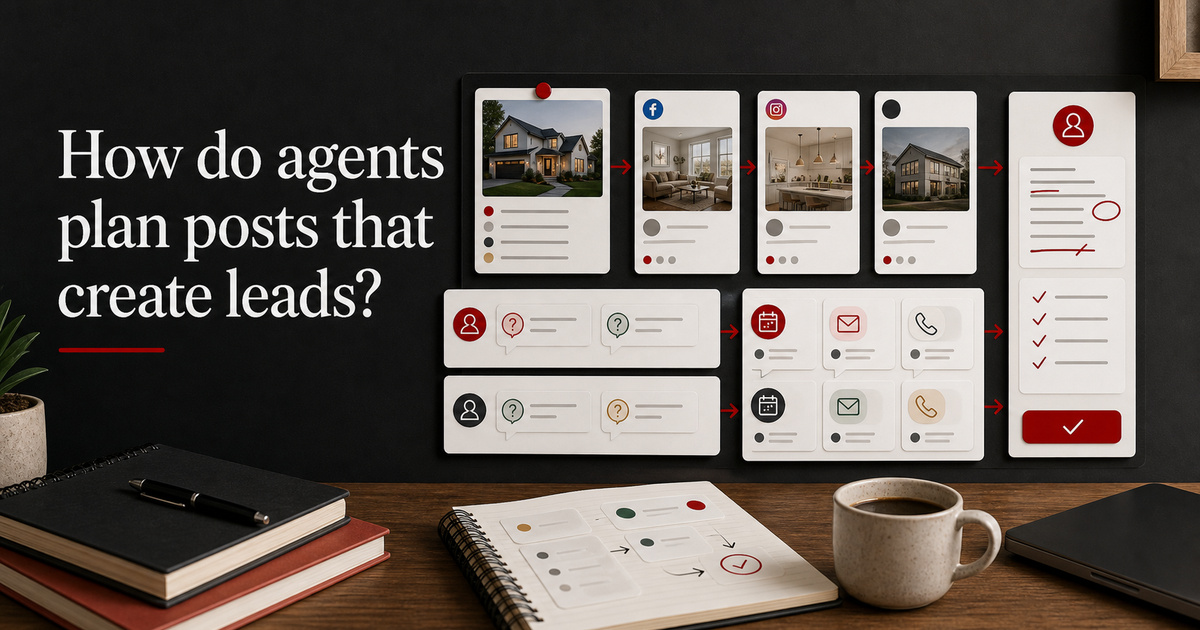
Plan real estate social posts that create better leads
RealEstateContent.ai workflow for planning source-backed social posts with clear CTAs.
· Founder, RealEstateContent.ai